Rental guide · Updated 2026-11-25
Walk-In Cooler or Freezer Failure: A First-Hour Checklist and Temporary Cold Storage
The first hour after a walk-in alarm: what to check, what to move, and when to rent a temporary walk-in cooler.
Key points
- Refrigerated food belongs at 40 °F or below; frozen at 0 °F.
- Keep the doors shut while you decide.
- A refrigerated trailer can take the stock within the day it is placed and powered.
The FDA says to keep a refrigerator at 40 °F or below and a freezer at 0 °F, and to use a freestanding thermometer because few controls show the actual temperature. When a walk-in alarm goes off, that thermometer is your first check.
1. Read the real temperature
Use a freestanding thermometer inside the box, not the display on the door. Write down the time and the reading.
2. Keep the doors closed
Every opening lets cold air out. The FDA's outage guidance suggests having coolers on hand if the power will be out for more than 4 hours; a walk-in full of stock needs more than coolers.
3. Call a refrigeration technician
Refrigerant work is regulated: EPA Section 608 prohibits venting refrigerants and requires certified technicians. Ask how long parts will take.
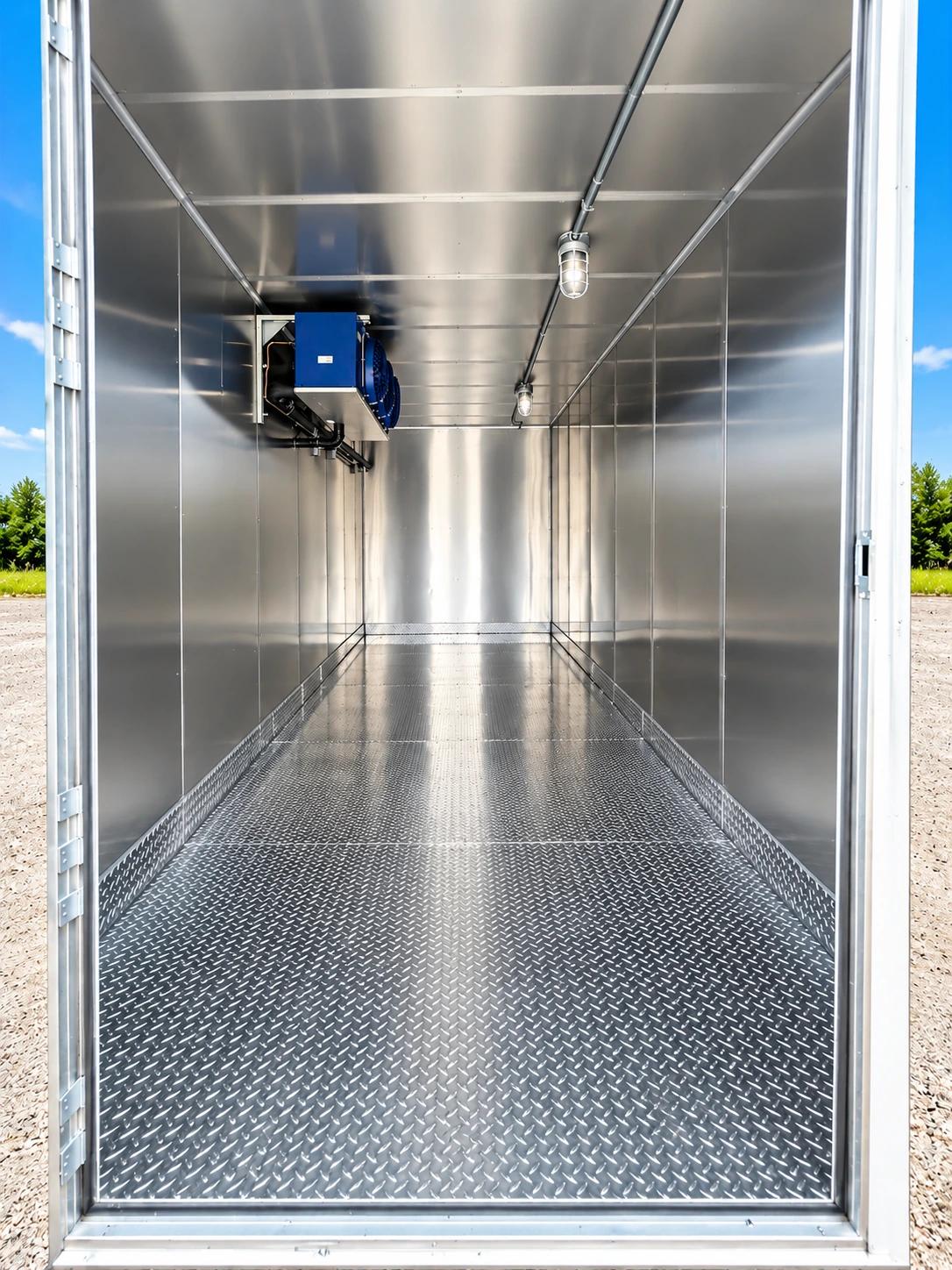
4. Rent a temporary walk-in
If the repair will take more than a day, a 12ft Refrigerated Trailer (starting from $1,895 / month) suits a single kitchen, and a 20ft Refrigerated Trailer comes in medium- and low-temperature versions for coolers and freezers. It is ready about an hour after placement and power hookup; let it pull down before loading.
See rental prices, estimate a term in the calculator, or read our emergency cold storage page.
Sources
- FDA: Refrigerator Thermometers, Cold Facts about Food Safety: Keep the refrigerator at 40 °F or below and the freezer at 0 °F; use a freestanding thermometer, since few controls show actual temperatures.
- FDA: Food and Water Safety During Power Outages and Floods: Keep the freezer at or below 0° F and the refrigerator at or below 40° F; have coolers on hand if the power will be out for more than 4 hours.
- EPA: Stationary Refrigeration and Air Conditioning (Section 608): Section 608 of the Clean Air Act prohibits intentionally venting ozone-depleting refrigerants and their substitutes; technicians need Section 608 certification.
Links checked 2026-11-25. Figures quoted above appear on the linked pages.